HOLDING SPACE: HOW BALTIMORE-BORN ARTIST DERRICK ADAMS REMAINS THROUGH CREATING COMMUNITY.

Words by Jacob Washington

Photos provided by Charm City Cultural Cultivation

When it comes to the concept of space, one often imagines a remote location in their mind. A place they may be familiar with. Sometimes it’s a setting that brings back unsettling memories, and other times it’s the complete opposite; where we remember how a specific side of ourselves flourished. 

But more than the physical, space is an ideal. It’s where customs are created and honored. Where ones who hold similar values come together. Where one can hone their craft. For Baltimore Native Derrick Adams, space isn’t simply a physical location, it’s a way of cultivating community. 

The critically-acclaimed artist who found himself leaving Charm City to expand his practice has since returned to the place where he first exercised his artistic voice to allow others like him have a space to not only learn and grow, but to simply exist. Through the founding of his non-profit The Charm City Cultural Cultivation, Adams welcomes creatives from the immediate community and across the world to engage with each other, learn, create and find solitude through three key program initiaitives: The Last Resort Artist Retreat, The Black Baltimore Digital Database, and Zora’s Den writing Group. 

As AoD explores what it takes to REMAIN committed to one’s vision, we sat down with Adams to discuss his journey as an artist, how the non-profit program speaks to his ethos as a creative, what holding space means to him, how he cultivates it, and what he thinks longevity means in a world where trends go as quickly as they come. 

Jacob Washington: Why did you leave Baltimore? What was that transition like when you left in your 20s? 

Derrick Adams: I was 21. And I was popping! I was making art, I was at MICA for a semester, doing pop-up art exhibitions in my friends' apartments. We had our own apartments in the art district and surrounding areas. We'd put art up, have drinks, play music, invite friends. And it wasn't just art friends—we had friends from Morgan State, Howard University, Coppin, MICA. A mix of DJs, criminal justice majors, occupational therapy students, future doctors, painters, sculptors. The conversations were very broad...What made me leave Baltimore was that at 21, I found I had already established my creative group. We were doing all the cultural cultivating at a young age, but without any financial support. When I realized this would only be repetitive and not move to the next level of sustainability, I realized I needed to leave Baltimore. I needed to be in a space where creativity was centered, and the priority was how to preserve and sustain it through outside support.

JW: So you knew your creative community, but you needed to see how your art was received by people outside your immediate circle? 

DA: Yes. Your group of friends is your emotional support, but to be sustainable as a creative, you need opportunities that build your career. You need to be tapped into the global market. 

JW: Can you elaborate? 

DA: “Most local creatives' work is solely based on Baltimore as the muse; communicating with people from Baltimore who understand the language of Baltimore is fine for them. But Baltimore also has Baltimore-based creatives. "Based" means you have a broader worldly view of the art ecosystem in the larger global market. Those are the people doing residencies outside Baltimore, exhibiting in different places, traveling to art fairs to challenge themselves and stretch their creative muscles in spaces of uncomfortability. That's what made me come back to Baltimore and do what I'm doing. I realized there was very little guidance for local creatives.
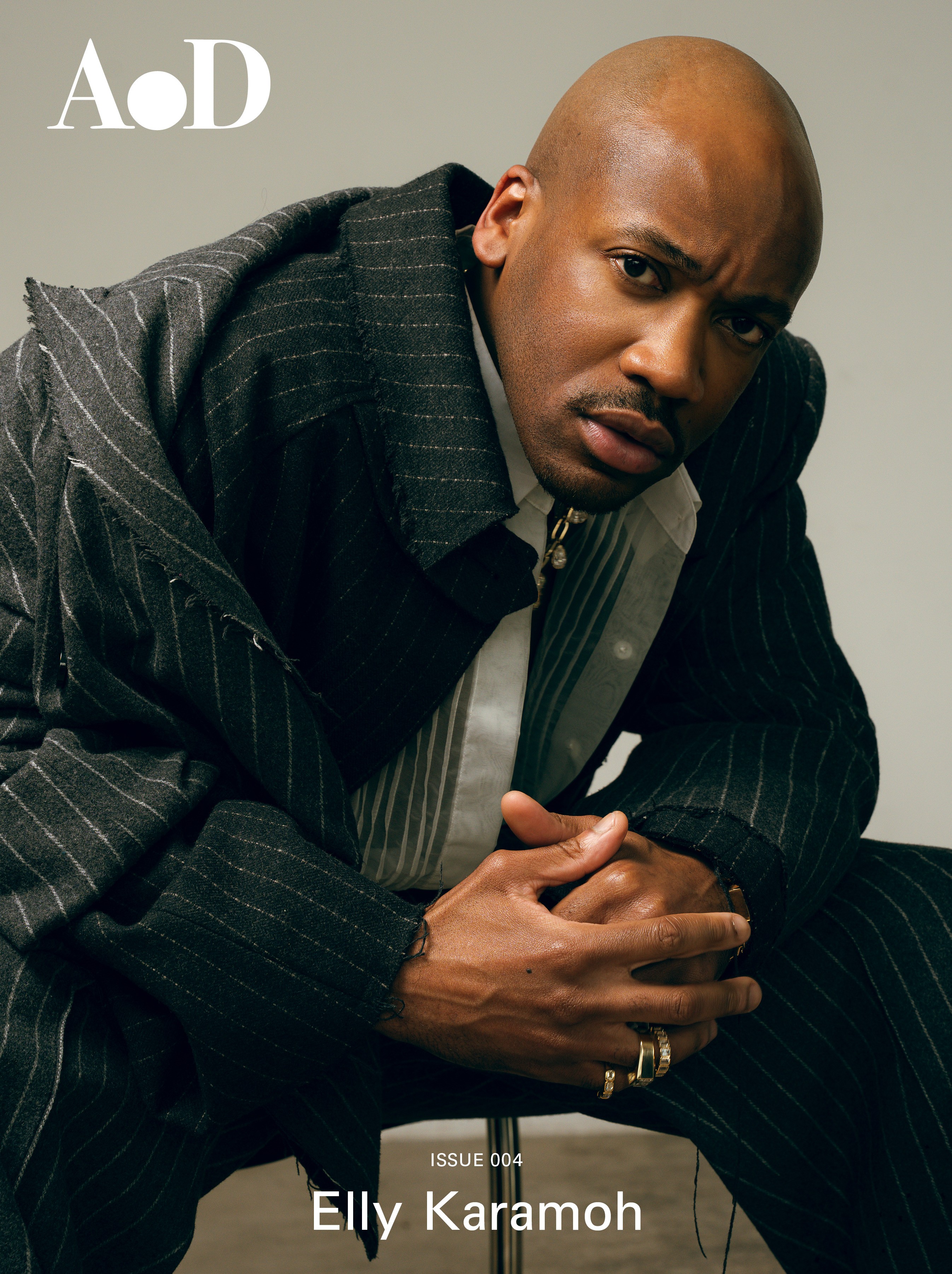
Continue reading in print

Issue 004

The full story continues in this limited print edition.

Buy the print issue

Credits

PRODUCTION

Words by

Jacob Washington

Photography

Charm City Cultural Cultivation

ART.DESIGN.CULTURE.INTENTION.

ART.DESIGN.CULTURE.INTENTION.

ART.DESIGN.CULTURE.INTENTION.

HOLDING SPACE: HOW BALTIMORE-BORN ARTIST DERRICK ADAMS REMAINS THROUGH CREATING COMMUNITY.

Words by Jacob Washington

Photos provided by Charm City Cultural Cultivation

When it comes to the concept of space, one often imagines a remote location in their mind. A place they may be familiar with. Sometimes it’s a setting that brings back unsettling memories, and other times it’s the complete opposite; where we remember how a specific side of ourselves flourished. 

But more than the physical, space is an ideal. It’s where customs are created and honored. Where ones who hold similar values come together. Where one can hone their craft. For Baltimore Native Derrick Adams, space isn’t simply a physical location, it’s a way of cultivating community. 

The critically-acclaimed artist who found himself leaving Charm City to expand his practice has since returned to the place where he first exercised his artistic voice to allow others like him have a space to not only learn and grow, but to simply exist. Through the founding of his non-profit The Charm City Cultural Cultivation, Adams welcomes creatives from the immediate community and across the world to engage with each other, learn, create and find solitude through three key program initiaitives: The Last Resort Artist Retreat, The Black Baltimore Digital Database, and Zora’s Den writing Group. 

As AoD explores what it takes to REMAIN committed to one’s vision, we sat down with Adams to discuss his journey as an artist, how the non-profit program speaks to his ethos as a creative, what holding space means to him, how he cultivates it, and what he thinks longevity means in a world where trends go as quickly as they come. 

Jacob Washington: Why did you leave Baltimore? What was that transition like when you left in your 20s? 

Derrick Adams: I was 21. And I was popping! I was making art, I was at MICA for a semester, doing pop-up art exhibitions in my friends' apartments. We had our own apartments in the art district and surrounding areas. We'd put art up, have drinks, play music, invite friends. And it wasn't just art friends—we had friends from Morgan State, Howard University, Coppin, MICA. A mix of DJs, criminal justice majors, occupational therapy students, future doctors, painters, sculptors. The conversations were very broad...What made me leave Baltimore was that at 21, I found I had already established my creative group. We were doing all the cultural cultivating at a young age, but without any financial support. When I realized this would only be repetitive and not move to the next level of sustainability, I realized I needed to leave Baltimore. I needed to be in a space where creativity was centered, and the priority was how to preserve and sustain it through outside support.

JW: So you knew your creative community, but you needed to see how your art was received by people outside your immediate circle? 

DA: Yes. Your group of friends is your emotional support, but to be sustainable as a creative, you need opportunities that build your career. You need to be tapped into the global market. 

JW: Can you elaborate? 

DA: “Most local creatives' work is solely based on Baltimore as the muse; communicating with people from Baltimore who understand the language of Baltimore is fine for them. But Baltimore also has Baltimore-based creatives. "Based" means you have a broader worldly view of the art ecosystem in the larger global market. Those are the people doing residencies outside Baltimore, exhibiting in different places, traveling to art fairs to challenge themselves and stretch their creative muscles in spaces of uncomfortability. That's what made me come back to Baltimore and do what I'm doing. I realized there was very little guidance for local creatives.

Continue reading in print

Issue 004

The full story continues in this limited print edition.

Buy the print issue

Credits

PRODUCTION

Words by

Jacob Washington

Photography

Charm City Cultural Cultivation

ART.DESIGN.CULTURE.INTENTION.

ART.DESIGN.CULTURE.INTENTION.

ART.DESIGN.CULTURE.INTENTION.