
“YOU ARE YOUR MOST VALUABLE CURRENCY":MICHAEL HASKINS JR. BUILDING CURRENCY STUDIOS
Words by Umi Patterson
Photography by Brandon Battle
For nearly two decades, Michael Haskins Jr. has built more than a brand. He has cultivated a philosophy, a creative practice, and a space that has evolved with intention while remaining rooted in its core values. In a culture that often celebrates speed and constant reinvention,
Currency Studio represents something different: the discipline to stay aligned with one's identity while allowing the work to grow.
"Your greatest asset isn't what you own. It's who you become."
Umi: "You Are Your Most Valuable Currency" has become more than a statement; it's almost a philosophy. What does that phrase mean to you today, and how has its meaning
evolved alongside Currency Studio?
Michael Haskins Jr.: Before "You Are Your Most Valuable Currency," there was another phrase: Respect Your Wealth. That was the first T-shirt I ever made, black, purple, and gray, with those three words across the front. That idea came directly from my parents. My mother worked at a bank and was incredibly frugal.
My father sold clothing and loved beautiful things, material-oriented, drawn to luxury. They represented two completely different relationships with money.
On my father's side, I grew up around cars, jewelry, and fashion. People who weren't afraid to spend, many of them coming up out of the streets, making a lot of money very quickly. But I also watched how quickly that money disappeared. There wasn't always a sense of stewardship. My mother saw that world completely differently. She talked about savings, good credit, retirement, and stability. She understood wealth through preservation.

Watching both sides at once, I kept asking myself: How do you tell people to value what they've accumulated not just financially, but holistically? That's where "Respect Your Wealth" came from.
For a few years, though, something didn't sit right. People liked the phrase, but I don't think they understood what I meant by wealth. As the brand evolved, I realized I wasn't actually trying to talk about money; I was trying to talk about people. That's when the phrase became "You Are Your Most Valuable Currency," because that had been the message all along.
Whether you're the frugal person saving every dollar or the person naturally drawn toward beautiful things, the most valuable thing either of you possesses isn't money. It's yourself. It's your mind. It's your way of thinking.
Without people, there is no creativity. Without people, there is no culture. Without people, there is no continuum. That's really what Currency has always been about, a reminder that your greatest asset isn't what you own. It's who you become.
Umi: What has remained constant through Currency Studio's growth, and what's had to Evolve?
Michael: What's remained constant is my need to creatively express myself through retail concepts. It started in my childhood bedroom, my first screen-print shop, my first gallery, my first concept shop. I've always been interested in building an environment where people don't just experience the object, but experience the world around it. That's expanded now to clothing, objects, automobiles, hospitality, architecture, but it's still just building spaces through my lens. Honestly, the endurance of Currency Studio has a lot to do with my partnership with my wife. What's had to evolve is how much of myself I give to the brand. Heather Gray Gallery is the clearest example. When I first started making clothes, I was speaking to a younger Black streetwear consumer, someone who looked like me. But I was becoming far more interested in art and architecture than fashion. I wasn't looking up to rappers or athletes anymore. I was looking up to architects, fine artists, sculptors, designers. So I created the gallery to invite those worlds in. Now someone might walk in and say, "I can see the architectural reference behind this space" instead of just, "This is a cool store." That's a completely different relationship. That's also where Matcha Hand came from. It wasn't about starting another business — it was about introducing a habit that already existed in my lifestyle. The gallery, the clothing, the tea, they're all expressions of the same point of view.
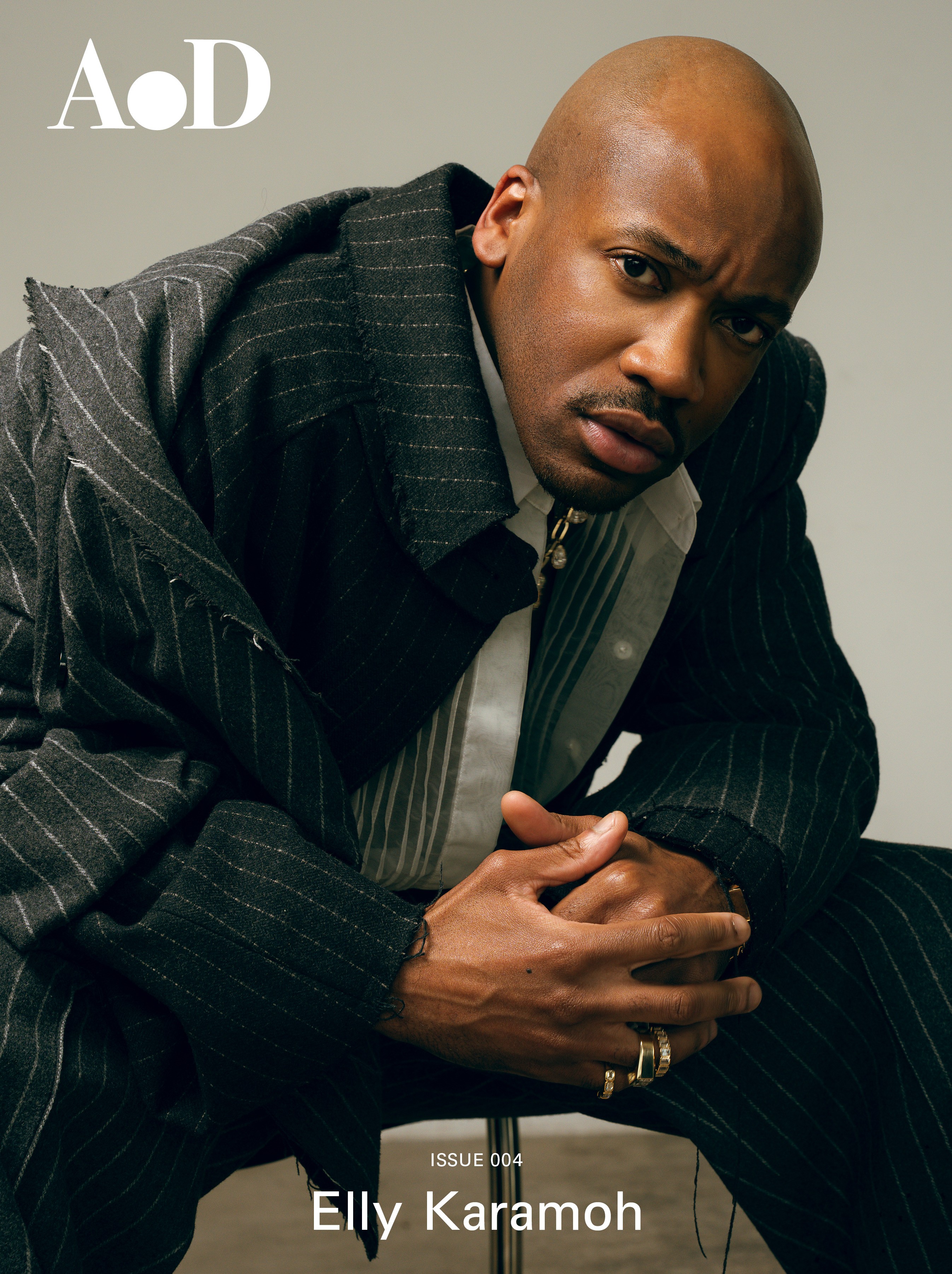
Continue reading in print
Issue 004
The full story continues in this limited print edition.
Buy the print issue
PRODUCTION
Words by
Umi Patterson
Photography
Brandson Battle