In Studio With: Inside the Design Playground

Jason Saft

Interview By: Alvin Wayne
Photography & Video By:
Hoshi Joell
March 2025

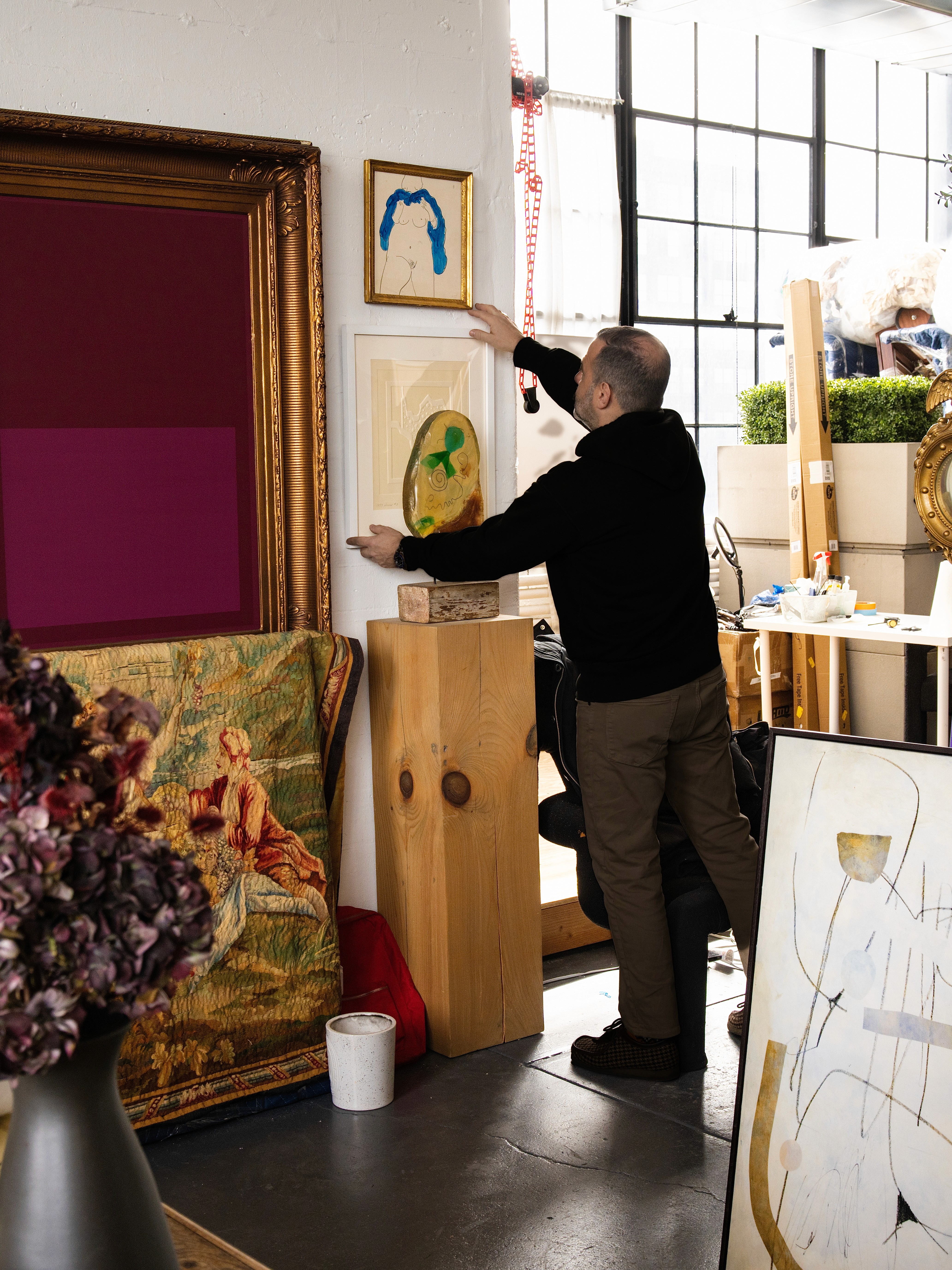
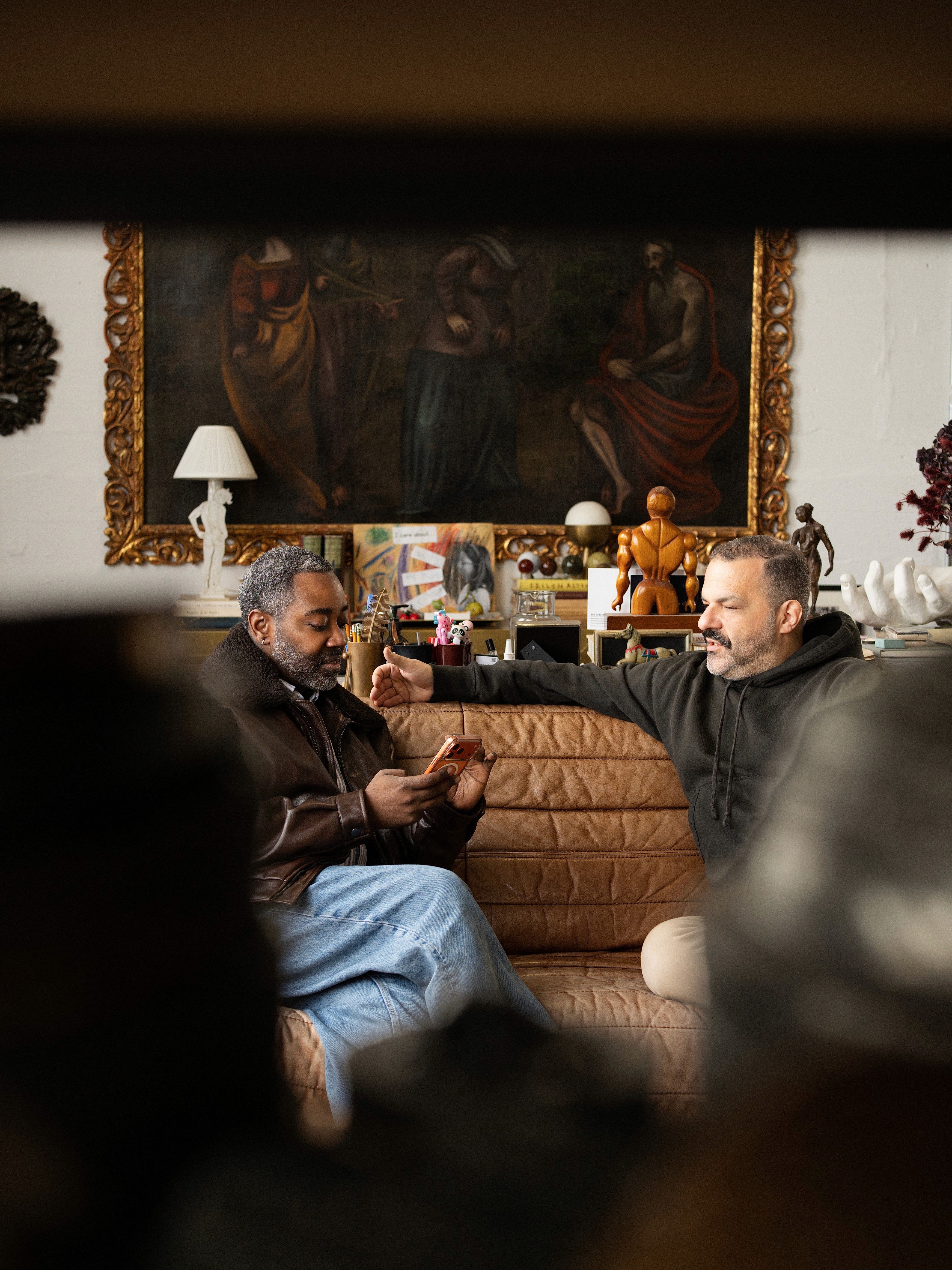
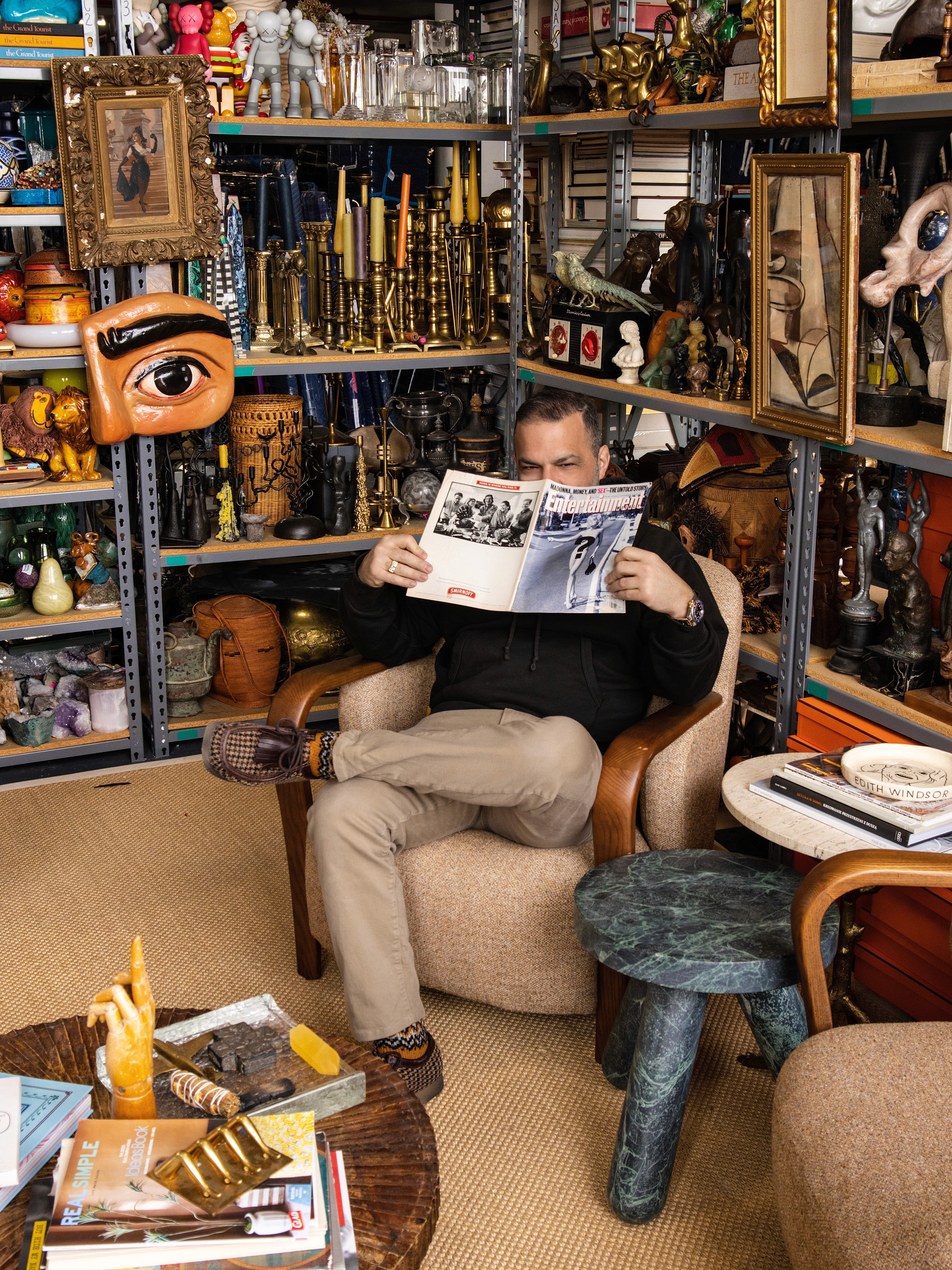
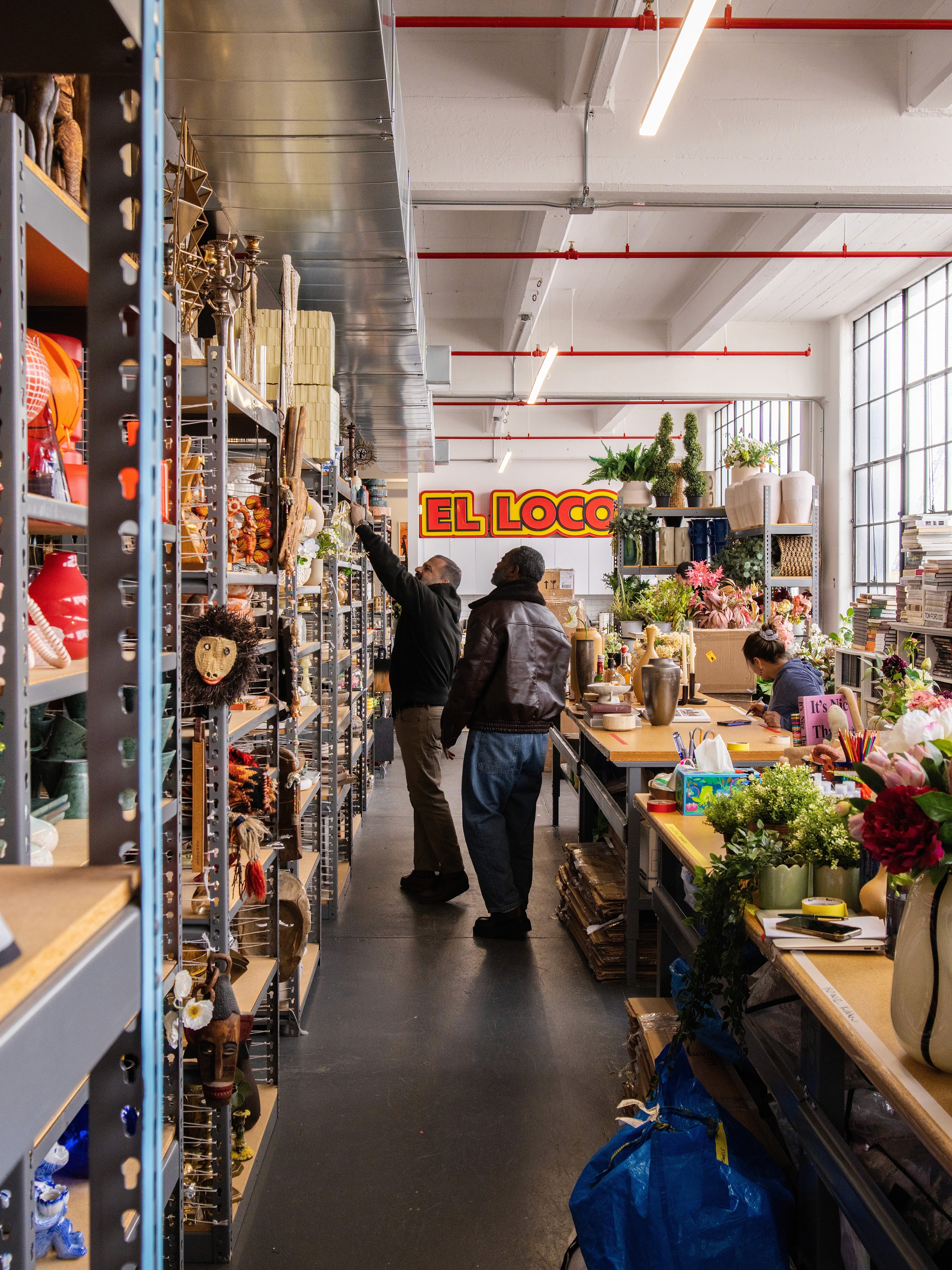
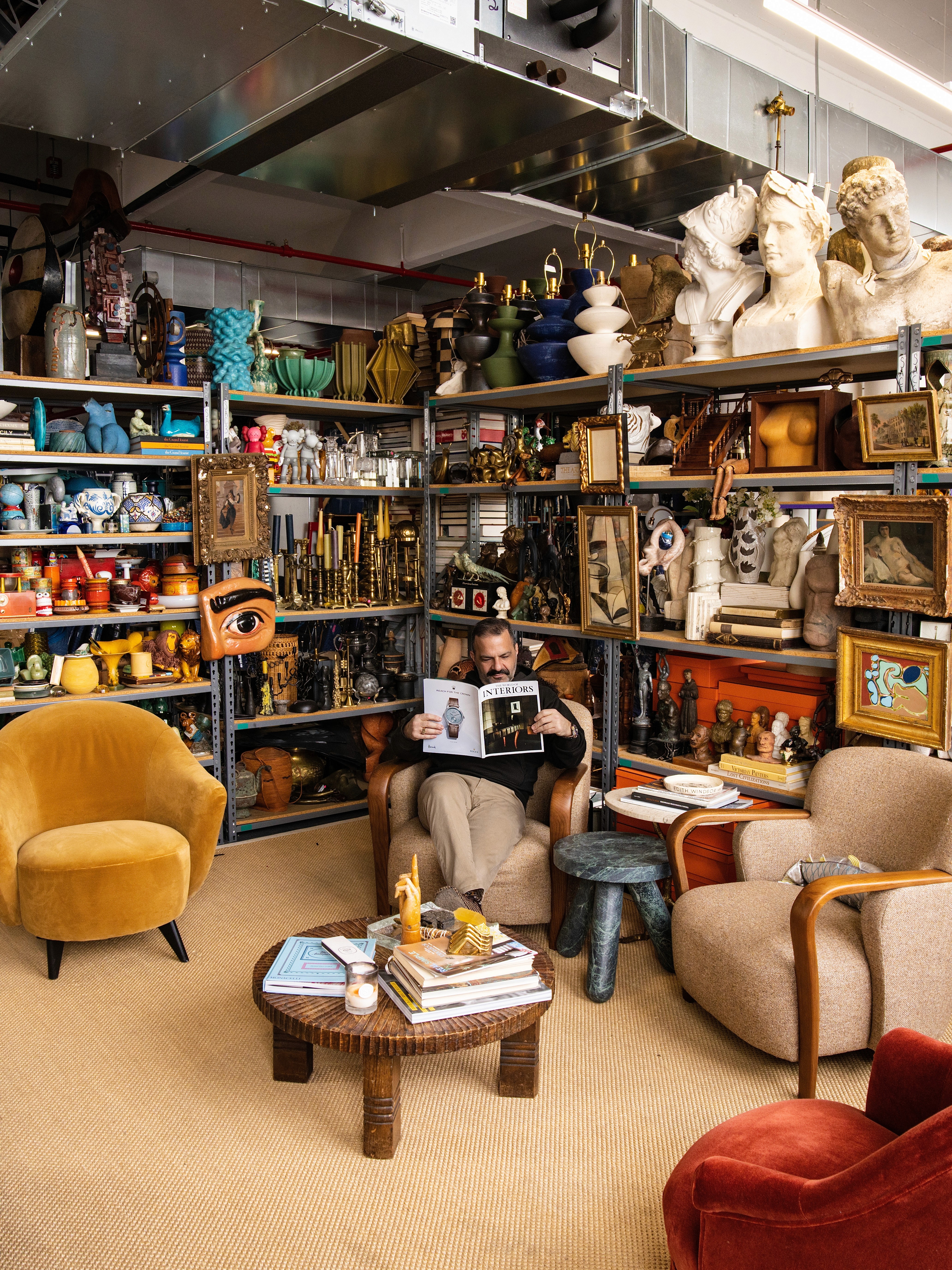
For this edition of In Studio With, I visited Jason Saft, founder of Staged To Sell Home, inside his massive studio and warehouse, a space that can only be described as a designer’s playground. From tchotchkes and layered artwork to furniture, styling pieces, and even faux fruit, every corner reveals the depth and precision behind his operation. As someone who has known Jason personally and watched his evolution over the years, it was an honor to step inside the wonderfully categorized world of what I like to call the stager’s stager.

What becomes immediately clear is that Jason’s work goes far beyond traditional home staging. His spaces don’t simply prepare a property for market. They create an emotional entry point for the buyer. During our conversation, we discussed the pivotal moments that shaped his career, the discipline behind his editing process, how he manages a high volume of projects without losing detail, and the intentional ways he is bridging the worlds of luxury staging and interior design.

AoD: You built Staged To Sell Home out of your real estate background. What was the pivotal moment when you realized staging was not just a service, but your true creative and professional lane?

Jason: I built Staged To Sell Home over twenty years. There wasn’t one cinematic lightning strike—no single, triumphant epiphany. The truth is quieter than that. The pivotal moments came slowly, almost reluctantly, because I doubted myself the entire time. I didn’t think I was smart enough to run a business. I wasn’t sure I had the right to call myself a designer. I assumed people would see through me.

But project after project, something undeniable kept happening: the rooms shifted—and so did the response.

What made it unusual was that I wasn’t just redesigning these spaces. I was also the agent showing them. I stood there as buyers walked through, listening to their unfiltered reactions. They had no idea the person adjusting the light fixtures, painting the walls, hanging removable wallpaper, and building small vignettes out of whatever I could find—sometimes from my own apartment, sometimes from the street—was standing right in front of them.

And the feedback was immediate. Honest. Electric.

As the projects grew, so did the response. The scale increased. The stakes increased. My doubt, stubbornly, did too.

It wasn’t until the pandemic—when the world paused and I finally had the space to pause with it—that I could take inventory. Not just of the projects or the sales, but of the feeling. The consistent thread I had never fully acknowledged was joy.

I was happiest late at night, after my day job ended, alone in a half-finished space. Designing didn’t drain me—it charged me. I would wake up almost restless to get back to it, ideas running faster than I could execute them. I had trouble sleeping because I was so eager to return.

That’s when it became clear: this wasn’t a side skill. It wasn’t an add-on service.

It was the work that made me feel most alive.

AoD: You are known for transforming even the most challenging listings into aspirational spaces. When you first walk into a property, what are you immediately looking for and what story are you trying to unlock?

Jason: When I walk into a space, I’m not looking for inspiration first. I’m looking for problems.

That’s often why we’re hired. Not as decorators—but as problem solvers. A large portion of our work at Staged To Sell Home happens in properties that have already failed to sell. They’ve sat. They’ve stalled. Something isn’t working. My first job is to figure out what that is.

I walk the space and make a quiet inventory: Where does it feel off? What’s fighting the architecture? What’s distracting from the light, the scale, the proportions? Sometimes it’s layout. Sometimes it’s color. Sometimes it’s simply a lack of intention. Whatever has made the home unsellable becomes the starting point.

Once I understand the flaws, the design process begins.

Every decision—every chair, every piece of art, every accessory, every shift in lighting—is made in response to those problems. The work isn’t random. It’s strategic. Each detail is there to mitigate what wasn’t working and redirect the eye toward what is. Design, in this context, is precision.

Only after the issues are solved do I begin to shape the narrative. Then comes the palette. The texture. The rhythm of the rooms. The elements that hold attention. The pieces that make someone linger five times longer than they would in an empty or mediocre space.

Because once the problems are quiet, the story can speak.
AoD: Your work requires an incredibly sharp editing eye, especially knowing these homes are going to market. How do you decide what stays, what goes, and what will emotionally connect with buyers?

Jason: I’m ruthless—and it took a long time to earn that kind of eye.

It requires a critical lens and a constant willingness to question yourself. The hardest part is getting out of your own head: stop designing for what you like, what you prefer, what you think works—and start designing for what resonates with the buyer. What makes sense for their life. What will actually stop them in their tracks.

Because in about 85% of the projects I walk into, I’m staging for a world that isn’t mine—different class, different wealth, different social codes. Where they grew up, where they went to school, what “normal” looks like for them. It can feel foreign if you pretend it isn’t.

So I study.

I pay attention like it’s my job—because it is. When I travel, when I’m in someone’s home for a dinner party, anywhere I’m in those environments, I’m watching. I’m taking mental notes. I’m listening to what people respond to, what they value, what they casually dismiss. I’m building an internal library of taste cues and cultural signals.

And then I apply it with discipline: I make the final call based on the consumer, not on myself.

That level of editing is challenging—and I try to explain this to my team. Sometimes they think I’m just being critical. But it’s not criticism for sport. It’s an unrelenting commitment to precision: creating something so sharply aligned with the target buyer that it feels inevitable.

AoD: You manage a remarkable volume of projects, inventory, and installations at once. What systems or mindset shifts have helped you scale while maintaining your signature level of detail?

Jason: Scaling, for me, never meant loosening the grip on detail. It meant building systems strong enough to protect it.

One of the key reasons we’re able to operate at a high level—across a remarkable volume of projects, inventory, and installs—is that I treat every single piece as consequential. Every chair. Every object. Every lamp. The same ruthlessness I apply to editing a room, I apply to building our inventory.

I’ll often buy one of something and test it. I want to see it in a real space. Does it anchor the room? Does it photograph well? Does it elevate what it’s near? Does it sing—or is it just fine? If it earns its place, then I’ll scale it. If not, it doesn’t get a second chance. Our inventory is constantly evolving—refined through trial, instinct, and study. I look everywhere for reference points: old masters, contemporary street artists, architecture, fashion. The vocabulary expands, but the filter stays sharp.

At the same time, growth required a mindset shift: letting go of ego without letting go of standards.

I involve my team deeply. I want them thinking, proposing, solving. I want them to develop their own eye. But I oversee everything. Not from a place of control for its own sake—but because I understand how much the smallest decision can alter the outcome. A three-inch shift in placement can change how a room feels. A slightly wrong tone of wood can flatten an entire story.

Scaling isn’t about doing less. It’s about building a structure where excellence becomes repeatable.

The signature level of detail doesn’t survive by accident. It survives because it’s protected—systematically, relentlessly, every single time.

AoD: You have built strong relationships with artists and artisans whose work often appears in your projects. How do you cultivate those partnerships, and why is that collaboration important to the Staged To Sell Home point of view?

Jason: I gravitate towards things and people I deeply enjoy and connect with… and then I make an effort to highlight their art and craft.  I think this is a responsibility of every in design to raise others up and share the fruits of their labor.

AoD: Your work increasingly sits at the intersection of luxury staging and luxury interior design. How have you intentionally bridged those two worlds, and where do you see that evolution heading?

Jason: I’ve never seen our work as “just” staging.

What I’m drawn to—obsessively—is interior design. Not the surface simplicity people often associate with staging, but the depth of it. The layering. The authorship. The intention that lives beyond the sale.

I’m constantly pushing our work in that direction. Studying how the best designers handle proportion, tension, materiality. Watching how taste evolves. Asking how we can do it differently—and better. Staging may be the entry point, but the aspiration has always leaned toward design.

What’s interesting is that for many people, our work is their first experience of a fully realized interior. Sometimes it’s the buyer walking into a space that suddenly feels elevated. Sometimes it’s the seller who has lived in their home for decades and never imagined it could look the way we’ve reinterpreted it. In those moments, the line between staging and design quietly dissolves.

And then the requests start.

We’re constantly asked to take on full-scale design projects. For now, I refer them out—often to designers whose work I genuinely admire. But at a certain point, when enough people are asking you to design their homes, it becomes difficult to ignore what that’s signaling.

I do see us intentionally bridging those two worlds. Luxury staging will always be our foundation—it’s precise, strategic, performance-driven. But the evolution is toward something more permanent. More immersive. Toward design that doesn’t just prepare a home for its next chapter—but shapes the way someone lives inside it.

That’s the direction. Not abandoning one world for the other—but expanding the vocabulary until they meet.

AoD: Running a fast-paced business at this scale can be all consuming. How do you personally protect your energy and maintain balance between the demands of the business and your personal life?

Jason: I'd like to plead the 5th on this.   (Passes out in corner…)


AoD: What is the single biggest recommendation you would give when it comes to designing a home that truly resonates?

My single biggest recommendation is simple, but it’s the difference between a home that looks “done” and a home that actually resonates:

Take your time.

Everyone is in a rush—myself included. But the best homes aren’t assembled; they’re considered. Study the space. Think through how you want to live in it: the flow, the function, the daily rituals you’re designing for. Ask what the home needs to do for you, not just what you want it to look like in photos.

Then build it intentionally, in phases. Layer by layer. Choice by choice. Let the home reveal itself instead of forcing a finish line.

If you’re in a temporary chapter—one or two years—that’s one thing. But if this is the place where you’re going to build a life, raise a family, or settle into your long term “this is it”… it deserves more than a rush job.

Because resonance comes from care. And care takes time.

ART.DESIGN.CULTURE.INTENTION.

ART.DESIGN.CULTURE.INTENTION.

ART.DESIGN.CULTURE.INTENTION.

In Studio With: Inside the Design Playground

Jason Saft

Interview By: Alvin Wayne
Photography & Video By:
Hoshi Joell
March 2025

For this edition of In Studio With, I visited Jason Saft, founder of Staged To Sell Home, inside his massive studio and warehouse, a space that can only be described as a designer’s playground. From tchotchkes and layered artwork to furniture, styling pieces, and even faux fruit, every corner reveals the depth and precision behind his operation. As someone who has known Jason personally and watched his evolution over the years, it was an honor to step inside the wonderfully categorized world of what I like to call the stager’s stager.

What becomes immediately clear is that Jason’s work goes far beyond traditional home staging. His spaces don’t simply prepare a property for market. They create an emotional entry point for the buyer. During our conversation, we discussed the pivotal moments that shaped his career, the discipline behind his editing process, how he manages a high volume of projects without losing detail, and the intentional ways he is bridging the worlds of luxury staging and interior design.

AoD: You built Staged To Sell Home out of your real estate background. What was the pivotal moment when you realized staging was not just a service, but your true creative and professional lane?

Jason: I built Staged To Sell Home over twenty years. There wasn’t one cinematic lightning strike—no single, triumphant epiphany. The truth is quieter than that. The pivotal moments came slowly, almost reluctantly, because I doubted myself the entire time. I didn’t think I was smart enough to run a business. I wasn’t sure I had the right to call myself a designer. I assumed people would see through me.

But project after project, something undeniable kept happening: the rooms shifted—and so did the response.

What made it unusual was that I wasn’t just redesigning these spaces. I was also the agent showing them. I stood there as buyers walked through, listening to their unfiltered reactions. They had no idea the person adjusting the light fixtures, painting the walls, hanging removable wallpaper, and building small vignettes out of whatever I could find—sometimes from my own apartment, sometimes from the street—was standing right in front of them.

And the feedback was immediate. Honest. Electric.

As the projects grew, so did the response. The scale increased. The stakes increased. My doubt, stubbornly, did too.

It wasn’t until the pandemic—when the world paused and I finally had the space to pause with it—that I could take inventory. Not just of the projects or the sales, but of the feeling. The consistent thread I had never fully acknowledged was joy.

I was happiest late at night, after my day job ended, alone in a half-finished space. Designing didn’t drain me—it charged me. I would wake up almost restless to get back to it, ideas running faster than I could execute them. I had trouble sleeping because I was so eager to return.

That’s when it became clear: this wasn’t a side skill. It wasn’t an add-on service.

It was the work that made me feel most alive.

AoD: You are known for transforming even the most challenging listings into aspirational spaces. When you first walk into a property, what are you immediately looking for and what story are you trying to unlock?

Jason: When I walk into a space, I’m not looking for inspiration first. I’m looking for problems.

That’s often why we’re hired. Not as decorators—but as problem solvers. A large portion of our work at Staged To Sell Home happens in properties that have already failed to sell. They’ve sat. They’ve stalled. Something isn’t working. My first job is to figure out what that is.

I walk the space and make a quiet inventory: Where does it feel off? What’s fighting the architecture? What’s distracting from the light, the scale, the proportions? Sometimes it’s layout. Sometimes it’s color. Sometimes it’s simply a lack of intention. Whatever has made the home unsellable becomes the starting point.

Once I understand the flaws, the design process begins.

Every decision—every chair, every piece of art, every accessory, every shift in lighting—is made in response to those problems. The work isn’t random. It’s strategic. Each detail is there to mitigate what wasn’t working and redirect the eye toward what is. Design, in this context, is precision.

Only after the issues are solved do I begin to shape the narrative. Then comes the palette. The texture. The rhythm of the rooms. The elements that hold attention. The pieces that make someone linger five times longer than they would in an empty or mediocre space.

Because once the problems are quiet, the story can speak.

AoD: Your work requires an incredibly sharp editing eye, especially knowing these homes are going to market. How do you decide what stays, what goes, and what will emotionally connect with buyers?

Jason: I’m ruthless—and it took a long time to earn that kind of eye.

It requires a critical lens and a constant willingness to question yourself. The hardest part is getting out of your own head: stop designing for what you like, what you prefer, what you think works—and start designing for what resonates with the buyer. What makes sense for their life. What will actually stop them in their tracks.

Because in about 85% of the projects I walk into, I’m staging for a world that isn’t mine—different class, different wealth, different social codes. Where they grew up, where they went to school, what “normal” looks like for them. It can feel foreign if you pretend it isn’t.

So I study.

I pay attention like it’s my job—because it is. When I travel, when I’m in someone’s home for a dinner party, anywhere I’m in those environments, I’m watching. I’m taking mental notes. I’m listening to what people respond to, what they value, what they casually dismiss. I’m building an internal library of taste cues and cultural signals.

And then I apply it with discipline: I make the final call based on the consumer, not on myself.

That level of editing is challenging—and I try to explain this to my team. Sometimes they think I’m just being critical. But it’s not criticism for sport. It’s an unrelenting commitment to precision: creating something so sharply aligned with the target buyer that it feels inevitable.
AoD: You manage a remarkable volume of projects, inventory, and installations at once. What systems or mindset shifts have helped you scale while maintaining your signature level of detail?

Jason: Scaling, for me, never meant loosening the grip on detail. It meant building systems strong enough to protect it.

One of the key reasons we’re able to operate at a high level—across a remarkable volume of projects, inventory, and installs—is that I treat every single piece as consequential. Every chair. Every object. Every lamp. The same ruthlessness I apply to editing a room, I apply to building our inventory.

I’ll often buy one of something and test it. I want to see it in a real space. Does it anchor the room? Does it photograph well? Does it elevate what it’s near? Does it sing—or is it just fine? If it earns its place, then I’ll scale it. If not, it doesn’t get a second chance. Our inventory is constantly evolving—refined through trial, instinct, and study. I look everywhere for reference points: old masters, contemporary street artists, architecture, fashion. The vocabulary expands, but the filter stays sharp.

At the same time, growth required a mindset shift: letting go of ego without letting go of standards.

I involve my team deeply. I want them thinking, proposing, solving. I want them to develop their own eye. But I oversee everything. Not from a place of control for its own sake—but because I understand how much the smallest decision can alter the outcome. A three-inch shift in placement can change how a room feels. A slightly wrong tone of wood can flatten an entire story.

Scaling isn’t about doing less. It’s about building a structure where excellence becomes repeatable.

The signature level of detail doesn’t survive by accident. It survives because it’s protected—systematically, relentlessly, every single time.

AoD: You have built strong relationships with artists and artisans whose work often appears in your projects. How do you cultivate those partnerships, and why is that collaboration important to the Staged To Sell Home point of view?

Jason: I gravitate towards things and people I deeply enjoy and connect with… and then I make an effort to highlight their art and craft.  I think this is a responsibility of every in design to raise others up and share the fruits of their labor.


AoD: Your work increasingly sits at the intersection of luxury staging and luxury interior design. How have you intentionally bridged those two worlds, and where do you see that evolution heading?

Jason: I’ve never seen our work as “just” staging.

What I’m drawn to—obsessively—is interior design. Not the surface simplicity people often associate with staging, but the depth of it. The layering. The authorship. The intention that lives beyond the sale.

I’m constantly pushing our work in that direction. Studying how the best designers handle proportion, tension, materiality. Watching how taste evolves. Asking how we can do it differently—and better. Staging may be the entry point, but the aspiration has always leaned toward design.

What’s interesting is that for many people, our work is their first experience of a fully realized interior. Sometimes it’s the buyer walking into a space that suddenly feels elevated. Sometimes it’s the seller who has lived in their home for decades and never imagined it could look the way we’ve reinterpreted it. In those moments, the line between staging and design quietly dissolves.

And then the requests start.

We’re constantly asked to take on full-scale design projects. For now, I refer them out—often to designers whose work I genuinely admire. But at a certain point, when enough people are asking you to design their homes, it becomes difficult to ignore what that’s signaling.

I do see us intentionally bridging those two worlds. Luxury staging will always be our foundation—it’s precise, strategic, performance-driven. But the evolution is toward something more permanent. More immersive. Toward design that doesn’t just prepare a home for its next chapter—but shapes the way someone lives inside it.

That’s the direction. Not abandoning one world for the other—but expanding the vocabulary until they meet.

AoD: Running a fast-paced business at this scale can be all consuming. How do you personally protect your energy and maintain balance between the demands of the business and your personal life?

Jason: I'd like to plead the 5th on this.   (Passes out in corner…)


AoD: What is the single biggest recommendation you would give when it comes to designing a home that truly resonates?

My single biggest recommendation is simple, but it’s the difference between a home that looks “done” and a home that actually resonates:

Take your time.

Everyone is in a rush—myself included. But the best homes aren’t assembled; they’re considered. Study the space. Think through how you want to live in it: the flow, the function, the daily rituals you’re designing for. Ask what the home needs to do for you, not just what you want it to look like in photos.

Then build it intentionally, in phases. Layer by layer. Choice by choice. Let the home reveal itself instead of forcing a finish line.

If you’re in a temporary chapter—one or two years—that’s one thing. But if this is the place where you’re going to build a life, raise a family, or settle into your long term “this is it”… it deserves more than a rush job.

Because resonance comes from care. And care takes time.

ART.DESIGN.CULTURE.INTENTION.

ART.DESIGN.CULTURE.INTENTION.

ART.DESIGN.CULTURE.INTENTION.